

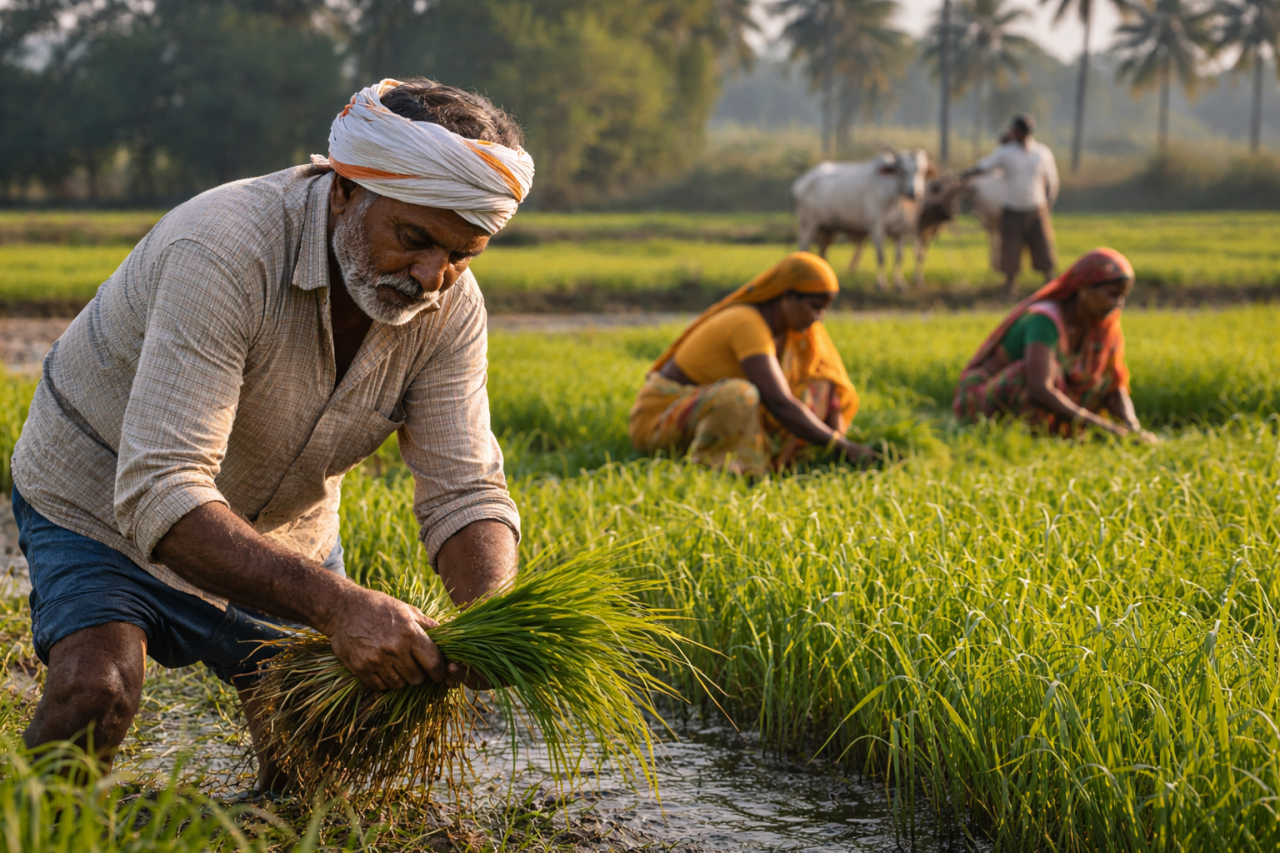
India’s largest farmer groups are moving ahead with nationwide protests this week, as worries persist over whether New Delhi has made excessive concessions in agriculture under an interim trade deal with the US.
The pushback comes as limited details of the framework agreement begin to emerge, fuelling anxiety among farm unions about the long-term impact on domestic producers.
Samyukt Kisan Morcha has confirmed protests over the coming days, including a nationwide strike on Feb. 12, keeping agriculture firmly at the centre of India’s political debate.
Farmers challenge trade concessions
Samyukt Kisan Morcha, a powerful coalition of farmers’ unions, says the government has crossed a long-standing line by opening agriculture to trade negotiations.
The group argues that even partial market access for US farm goods risks weakening protections for Indian farmers, many of whom operate on small plots and face rising input costs.
Agriculture remains a sensitive sector in India, both economically and politically.
Farmers represent one of the country’s most influential voting blocs and have a track record of sustained mobilisation when policy changes threaten livelihoods.
What the interim deal includes
A joint statement issued last week showed India agreed to cut or eliminate import duties on a range of US agricultural and food products.
These include distillers dried grains, red sorghum for animal feed, soybean oil, tree nuts, and fresh and processed fruit.
Supporters of the move say lower import barriers could ease food and feed prices.
However, farmer groups warn that cheaper imports may intensify competition for domestic producers, particularly in feed markets where margins are already thin.
Distillers dried grains, commonly known as DDGS, have emerged as a key flashpoint.
The product is largely derived from US genetically modified corn, raising concerns about indirect access for GM-linked products despite India’s restrictions on genetically modified crops.
GM debate and policy gaps
The government has repeatedly sought to reassure farmers that core red lines remain intact.
Commerce Minister Piyush Goyal has said sensitive agricultural sectors such as dairy and poultry were excluded from negotiations.
He has also stated that India made no concessions on imports of genetically modified crops.
Farmer leaders remain unconvinced. They argue that allowing DDGS imports creates a grey area that effectively permits genetically modified byproducts into the market.
According to critics, this risks setting a precedent that could be expanded in future trade talks.
Political pressure builds
India’s political opposition has echoed these concerns, describing the agreement as too open-ended.
Critics say the framework leaves room for deeper concessions that could disadvantage Indian farmers while supporting US agricultural exports.
Memories of earlier farmer protests continue to shape the response. In 2021, sustained demonstrations led by Samyukt Kisan Morcha forced the government to repeal three contested farm laws after a year-long standoff.
Not all farmer groups oppose the deal outright. Bharatiya Kisan Sangh, which is close to the ruling party’s ideological base, has said it is satisfied for now, citing assurances that genetically modified crops will not be allowed.
The post India farmers push ahead with nationwide protests over US trade concessions appeared first on Invezz