

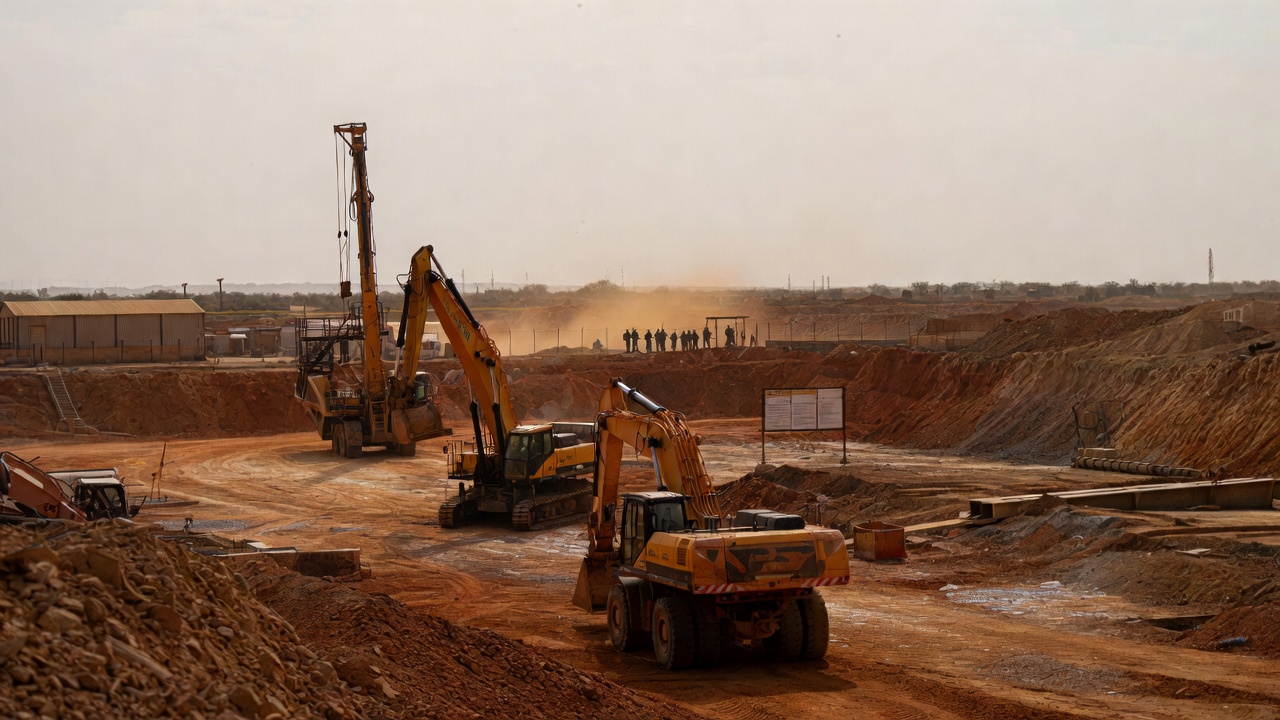
India is reportedly withdrawing from a major lithium extraction project in Mali, a decision driven primarily by escalating security risks and political instability within the West African nation.
The project is notable for its backing by Russia’s state nuclear corporation, Rosatom, adding a geopolitical layer to India’s concerns.
This withdrawal underscores New Delhi’s strategy to aggressively safeguard its foreign investments, especially those in resource-rich but volatile regions.
Escalating risks in Mali and geopolitical complications
The political landscape in Mali has been characterised by recent military coups and a persistent Islamist insurgency, creating a high-risk operational environment for foreign entities.
For India, a nation increasingly focused on securing critical mineral supply chains—like lithium, essential for the global transition to electric vehicles and renewable energy storage—the security of its personnel and assets takes precedence over the potential resource gains.
The involvement of Rosatom further complicates the situation. While India maintains historically strong ties with Russia, operating alongside a state-owned enterprise from a country currently under heavy Western sanctions in a politically fragile nation adds an additional layer of logistical and reputational risk.
New Delhi believes the risks associated with the project’s long-term viability and security are now outweighing the strategic benefits of securing a share of Mali’s lithium reserves, according to sources quoted in a Reuters report.
The move signals a broader reassessment of India’s investment portfolio in the Sahel region, prioritising stability and safety in its pursuit of global resource security.
As security risks escalate due to al Qaeda-linked militants attacking economic assets and foreign investment in the landlocked nation, Western countries, including Britain, France, and the United States, have advised their citizens to depart.
Rosatom approached two Indian government entities last year—Khanij Bidesh India Ltd and NLC India Ltd—regarding lithium exploration opportunities in Mali.
Mali is emerging as a producer of lithium, a metal vital for electric vehicle batteries.
Russia has been actively developing relationships with various African nations, including increasing military cooperation. This is evident in its strengthened ties with countries like Mali and Burkina Faso.
India’s strategic pivot: securing critical minerals for EV goals
As the world’s fastest-growing major economy, India’s push for widespread electric vehicle (EV) adoption is driving a critical need for a reliable lithium supply.
This mineral is central to India’s strategy to meet rising energy demand while simultaneously working to reduce its carbon emissions.
The country has set ambitious targets for EV penetration by 2030, aiming for electric vehicles to constitute 30% of all cars and a significant 80% of two-wheelers.
Given that current adoption stands at a mere 4% for cars and 6% for two-wheelers, securing a stable and long-term source of lithium is paramount for achieving these transformative energy and transport goals.
India is actively pursuing deals to secure access to critical minerals, essential for its energy transition and high-tech industries.
The focus is on mineral-rich nations like Argentina, Australia, and Chile.
A significant step in 2024 saw Khanij Bidesh India Limited partner with an Argentine state-owned company to explore and develop five lithium blocks.
This move underscores India’s strategic intent to secure a stable supply of resources like lithium, which are vital for manufacturing batteries for electric vehicles.
However, despite the initial success with Argentina, India has yet to finalize similar resource-access deals with other key countries, indicating a need for continued diplomatic and commercial efforts to bolster its mineral security.
The post India exits Mali lithium project citing security risks, Rosatom complications appeared first on Invezz